

Leading end-to-end product design for a premium mobile subscription across iOS, Android, and e-reader platforms for 2M+ global users.

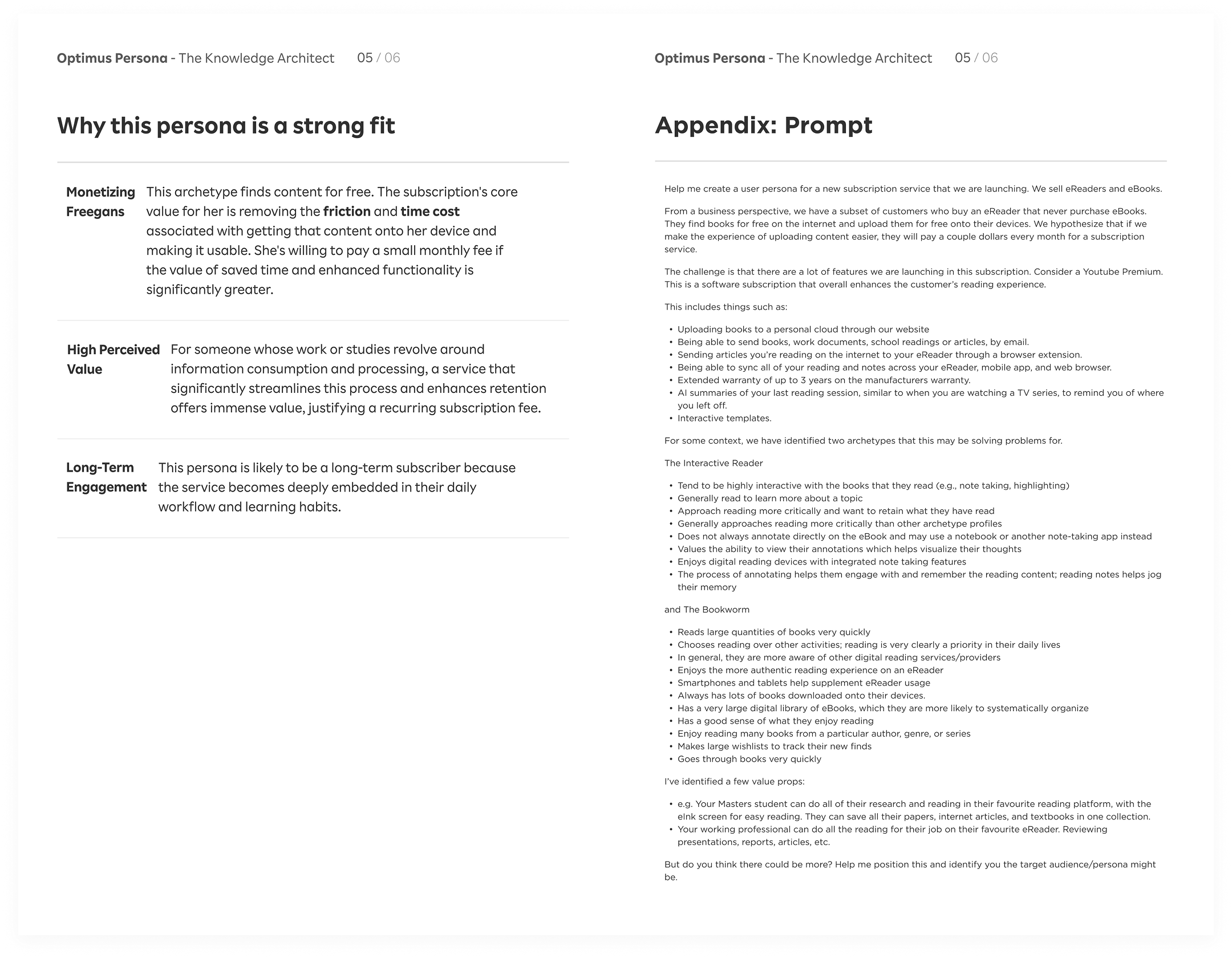
2M Kobo customers purchase an eReader but never buy eBooks—"Freegans" who represent $120M in untapped revenue. They get content by connecting library cards or uploading free books online.
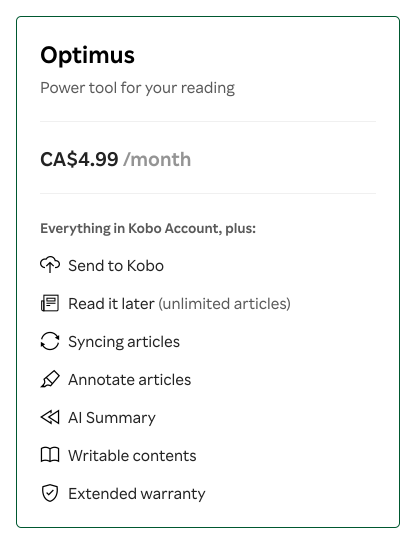
How might we monetize Freegans with a $4.99/month subscription without damaging brand trust?
Early research with 2000+ users revealed subscription fatigue concerns. To mitigate brand risk, we committed to solving existing pain-points for all users while gating premium features behind the subscription.
One year to discover, define, design, and develop six features. I balanced multiple objectives:
Interactive Readers: Non-fiction readers (students, professionals) who annotate heavily.
Bookworms: Avid readers with 500+ books who need better organization.
Timeline: September 2024 → December 2025 (handoff) → May 2026 (launch)
Team: Product Designer (me), PM, Engineering Manager, Architect, 2 Engineers

Discovery

Conceptual Designs

Technical Review

Product Decisions

Competitive Research

User Flows

Design Review

User Testing

Iteration

Design System Pitches

Develop and QA
Lead Product Designer — Owned end-to-end product design strategy for 15 months, embedded with cross-functional team.
Key Responsibilities:
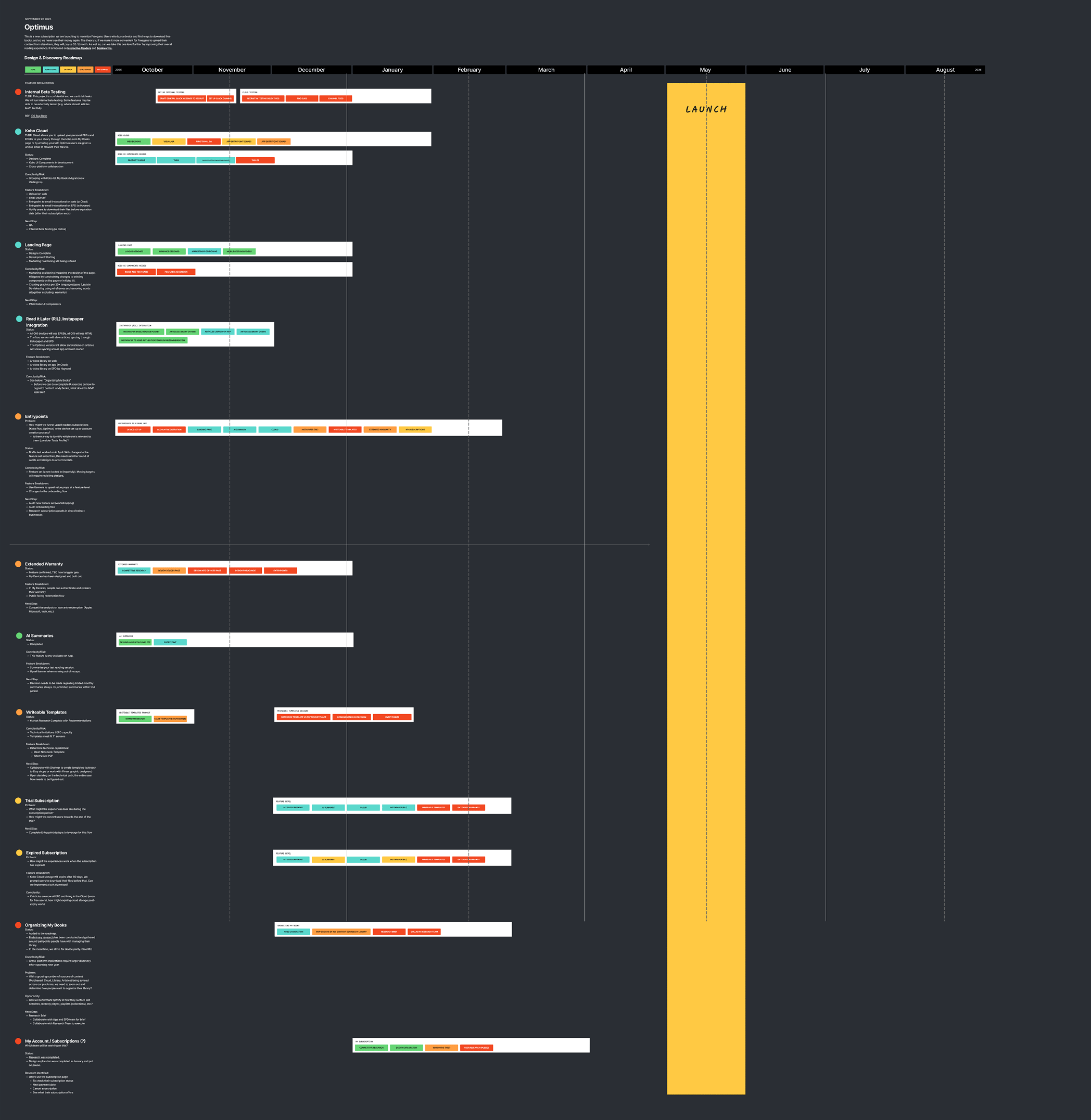
Breaking down each feature critical to launch. Roadmap details the current status, complexity and risk, and next steps for each feature.
Reviewed existing data (NPS surveys, support tickets, online forums, past studies), then conducted targeted research:
40%
of Freegans found upload process "clunky"
74%
wanted multiple library cards (wait times up to 8 months)
40%
requested email upload in feature requests
87%
with large libraries (500+ books) requested better library management
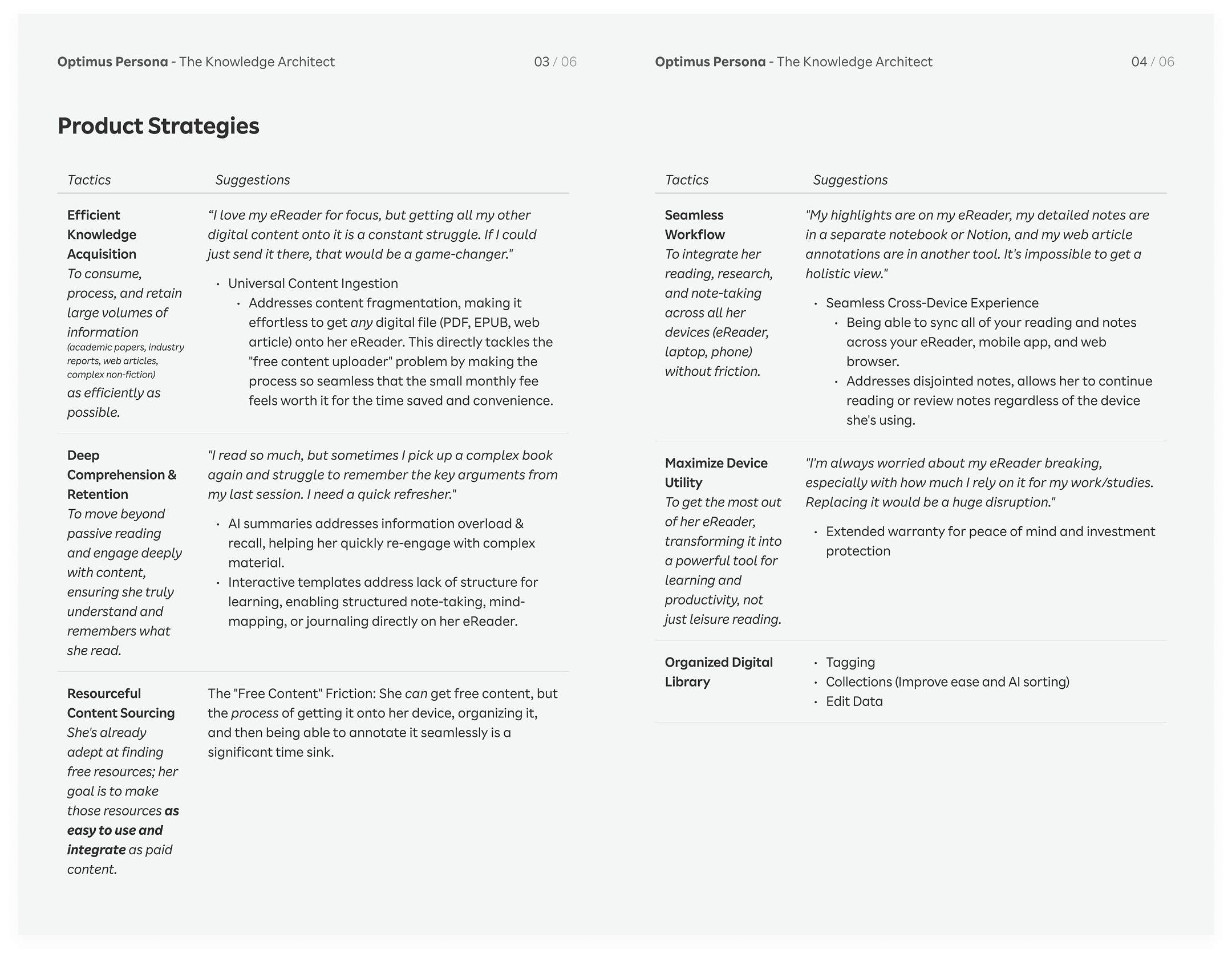
Main target: Academics and working professionals who read documents (textbooks, reports, papers, articles) and want distraction-free reading integrated into workflows.

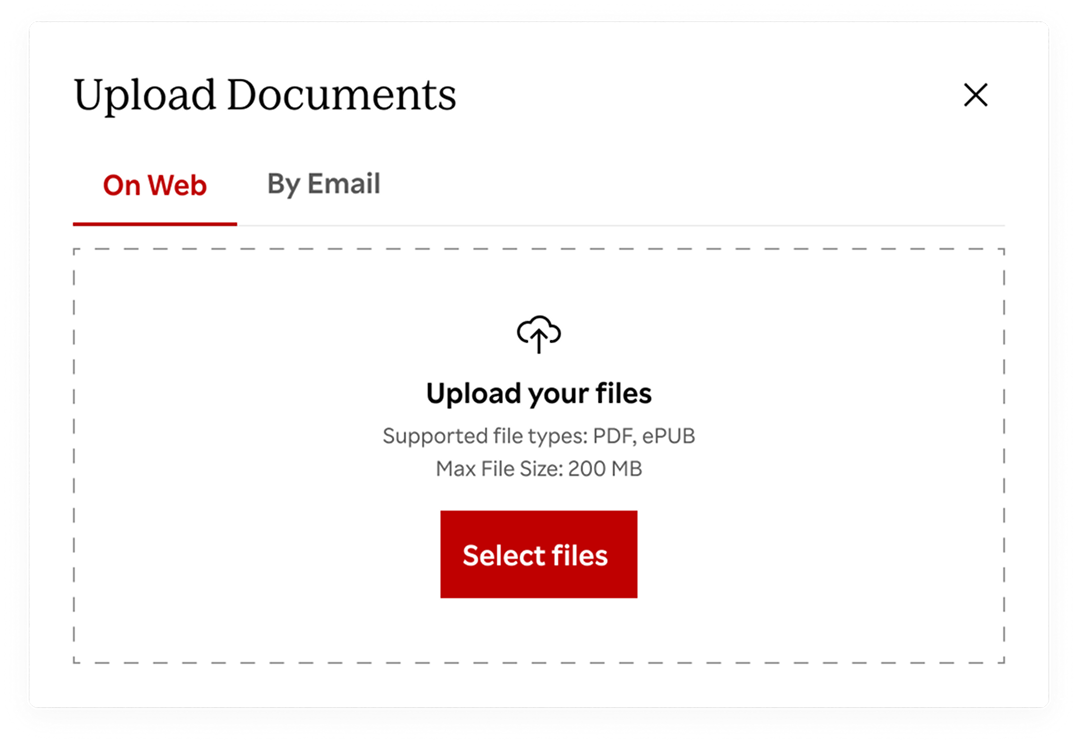
Problem: Upload process was clunky and time-consuming.
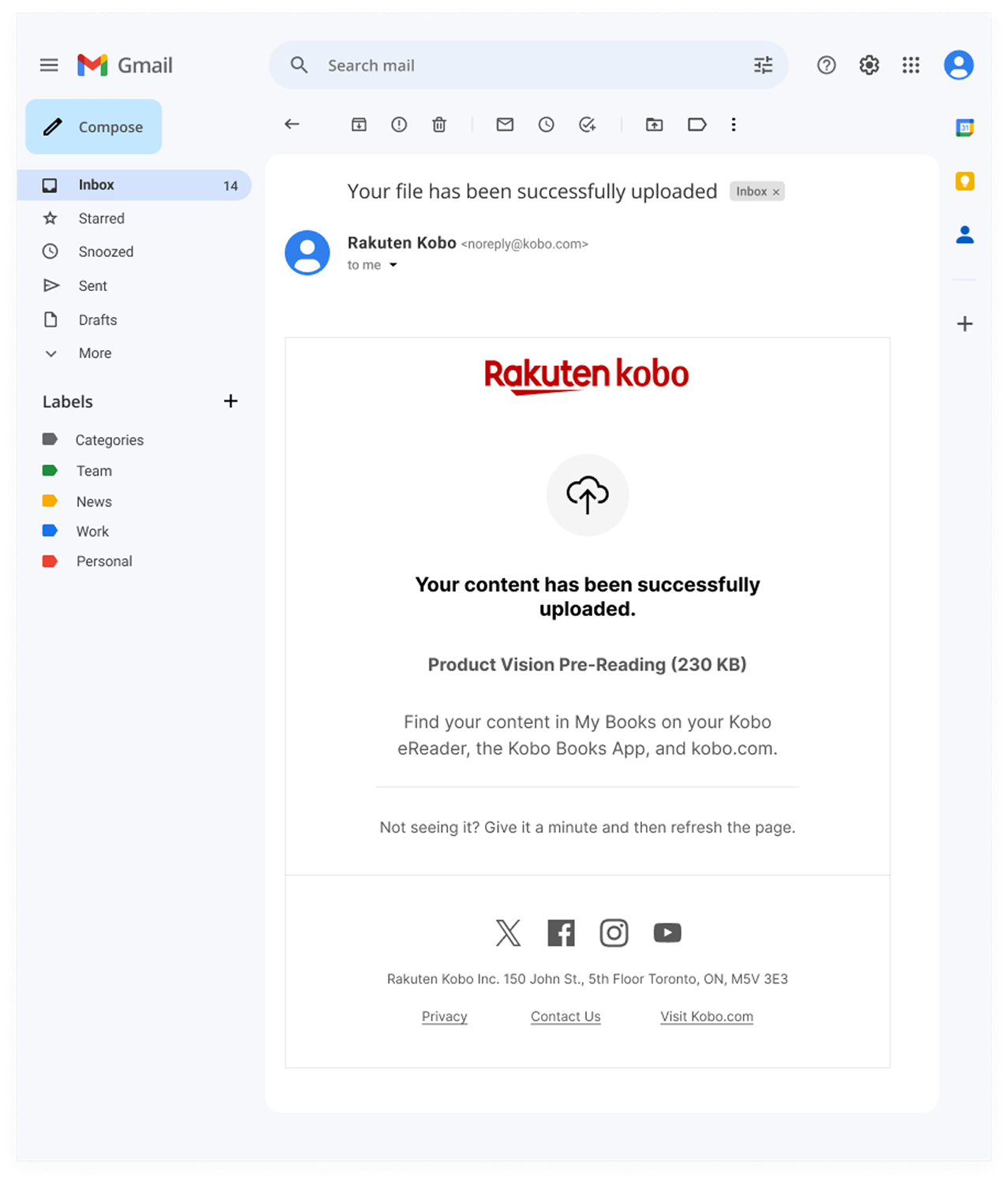
Solution: Progressive upload flow with drag-and-drop, bulk uploads, automatic metadata detection.
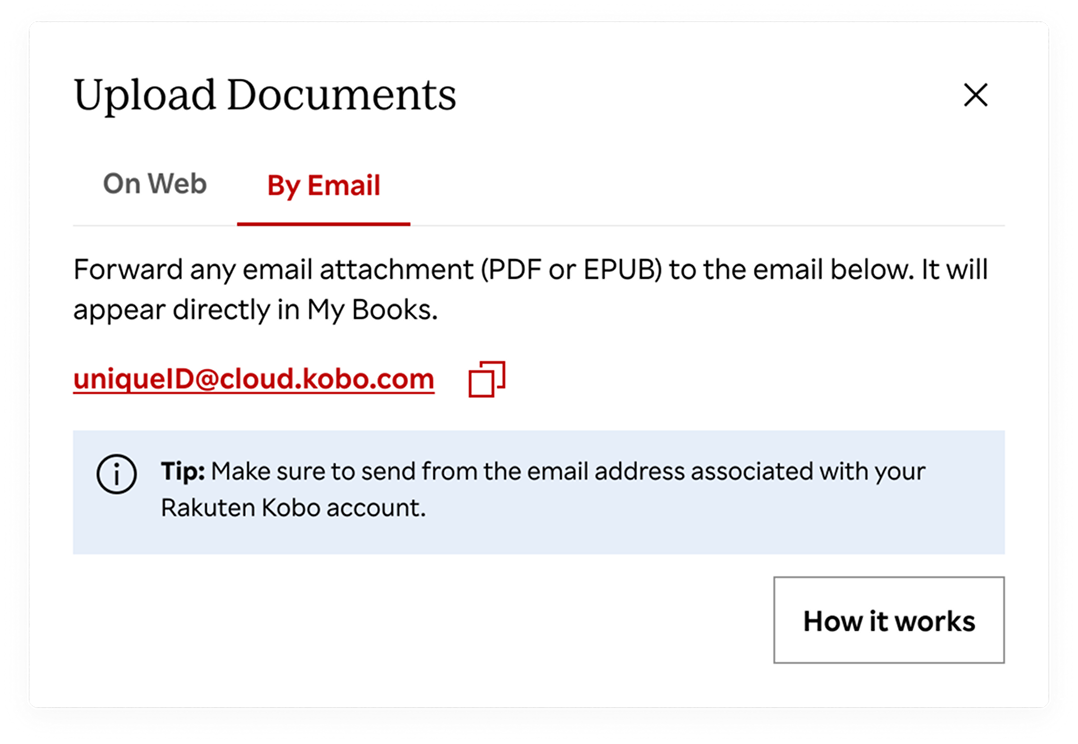
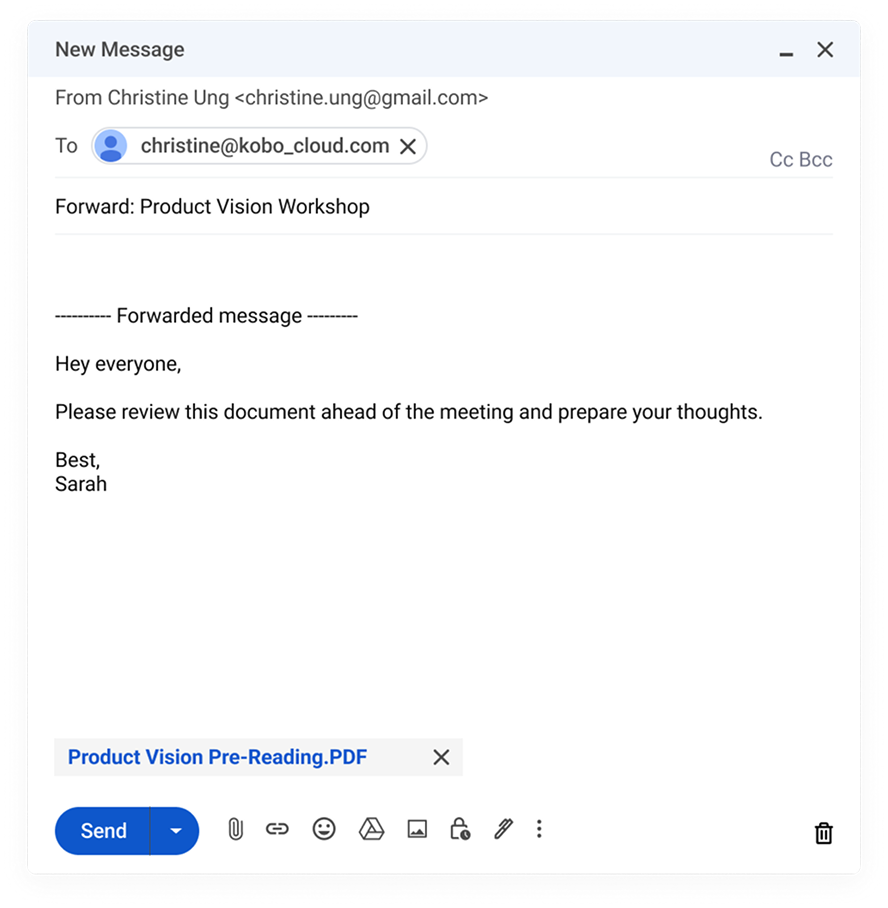
Problem: Highly requested feature (40% feature request) to forward work/school documents.
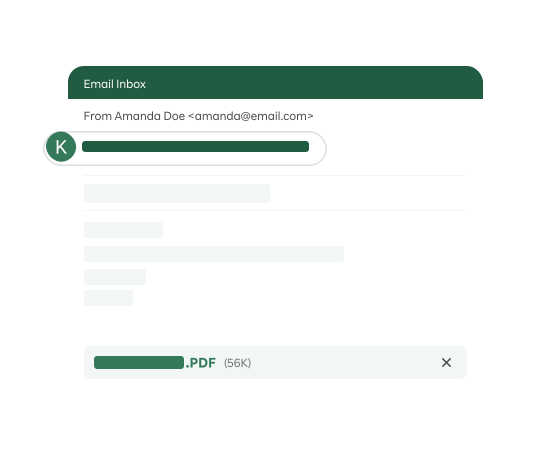
Solution: Personal Send-to-Kobo emails automatically uploading eReader.
Design Iteration: Initial test (n=7) showed users missed their personal email. Redesigned with one-tap copy function + alert banner.
Problem: HTML articles appeared buggy on eReaders with broken layouts.
Solution: Convert to EPUB format, integrate with collections, add browser extension.
Free vs. Gated Decision:
Ask me about: How we decided on build or buy. General improvements we made for all users including discoverability and usability (collections and navigation).
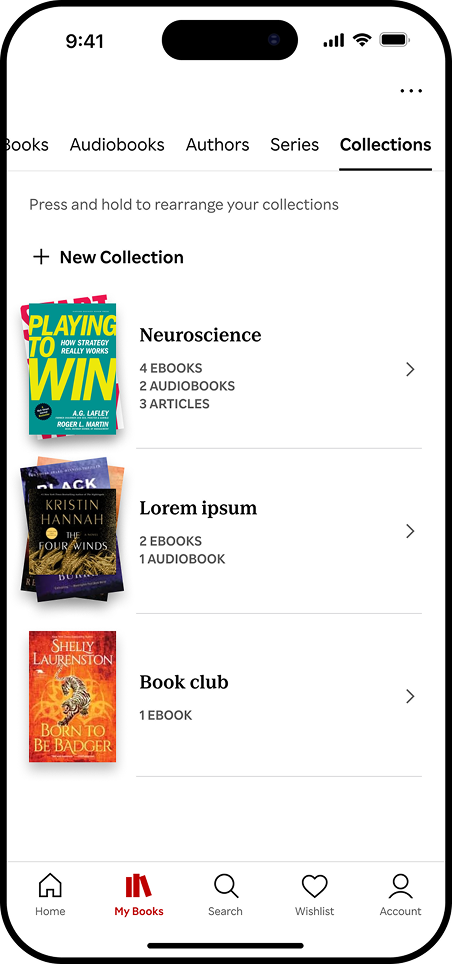
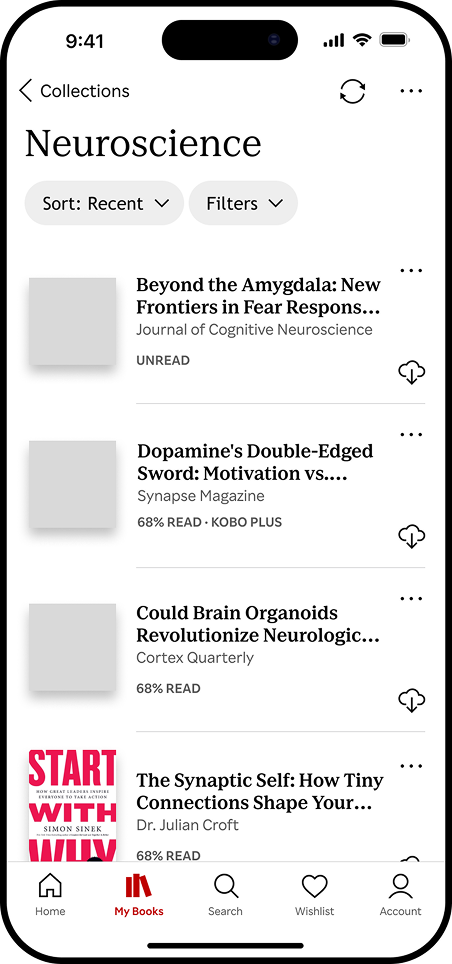
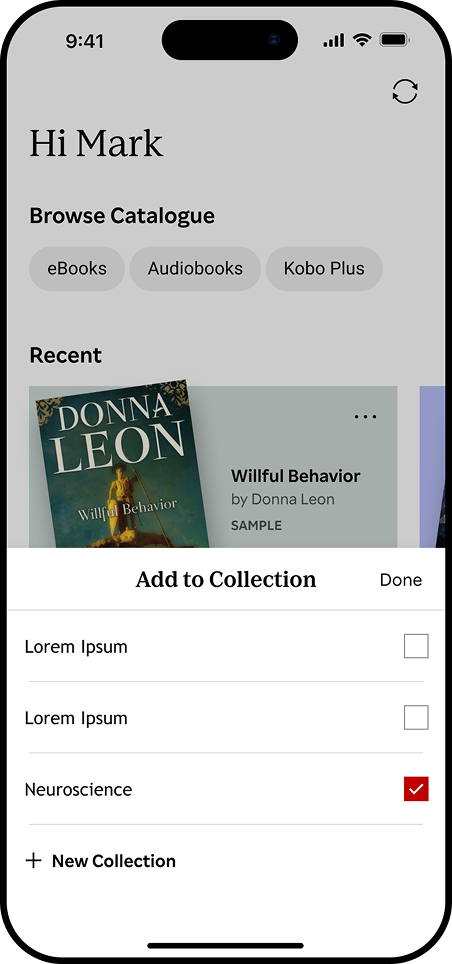
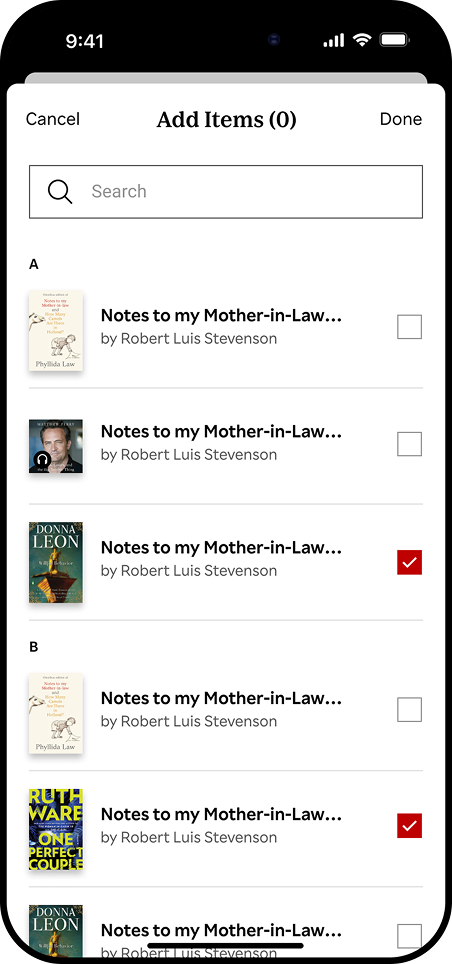
Pictured above: Mobile experience of Collections including articles.
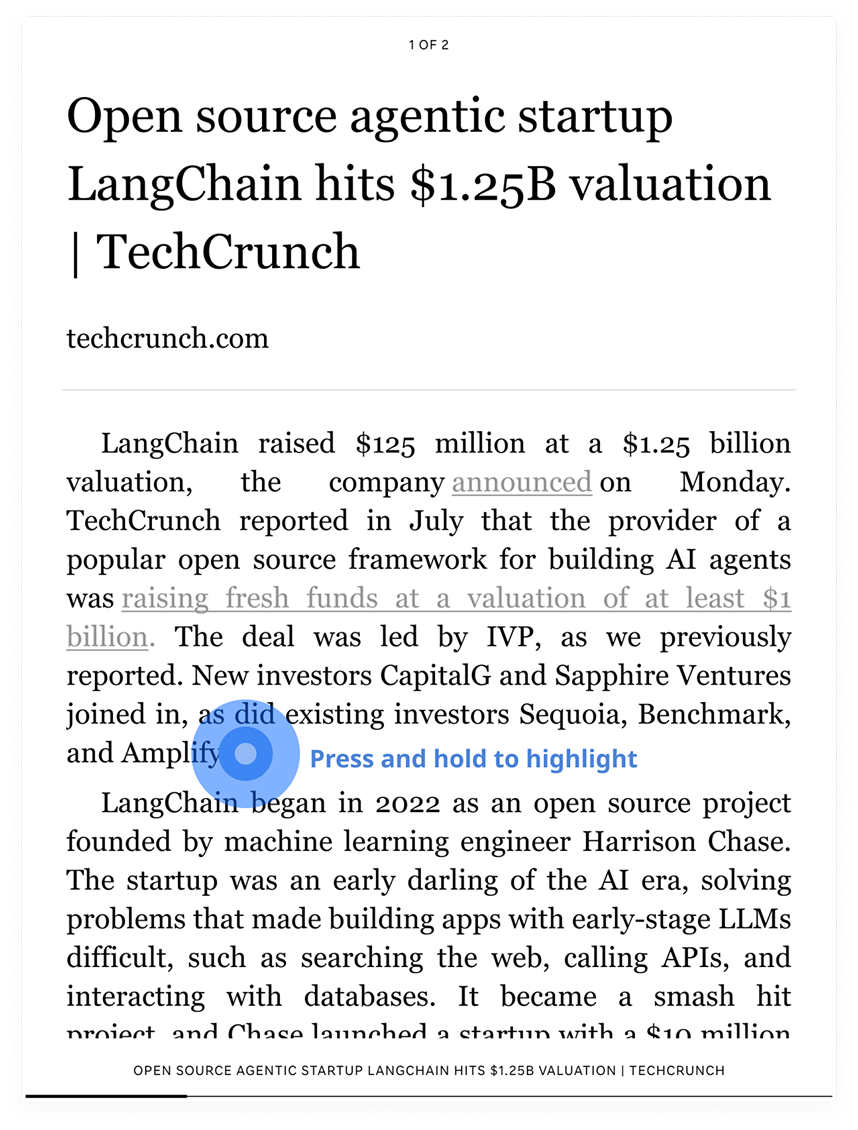
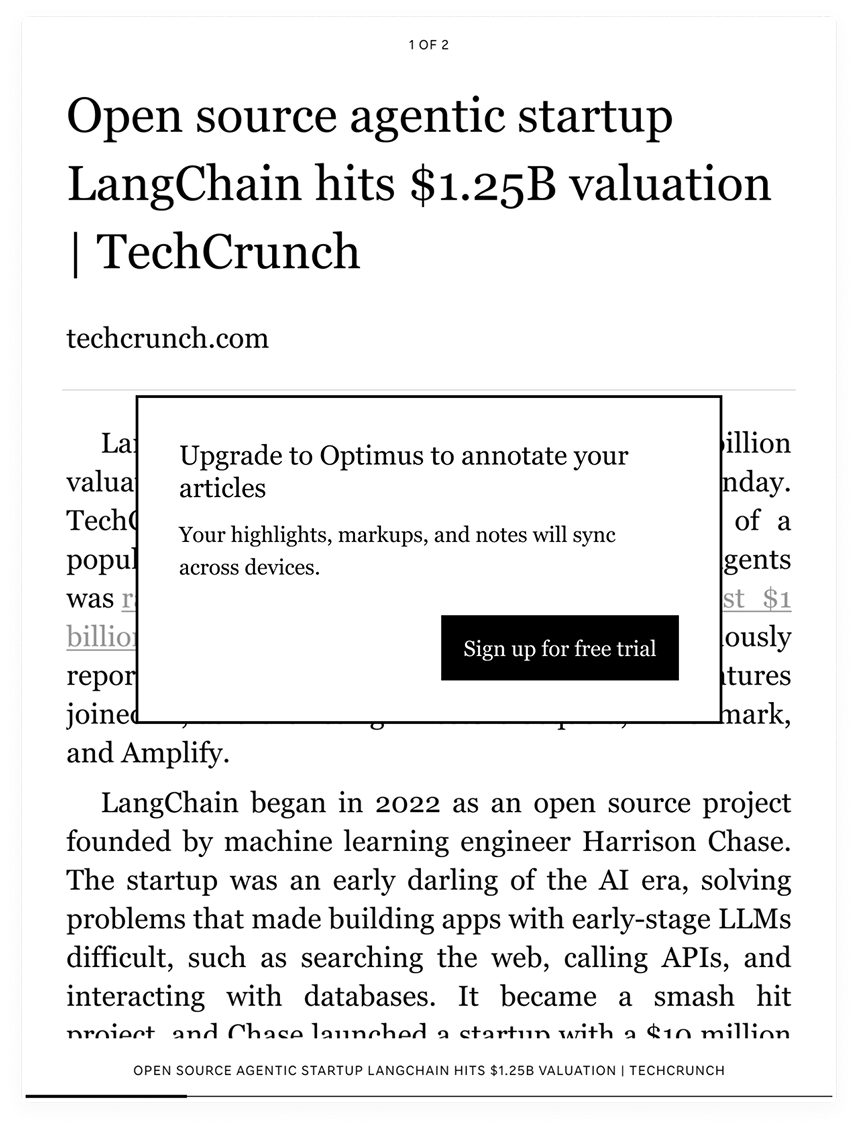
Pictured above: Viewing articles on eReader with upsell entry-point, gating the annotation experience.
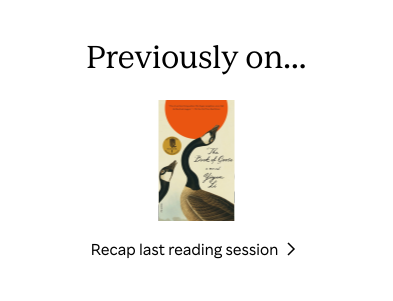
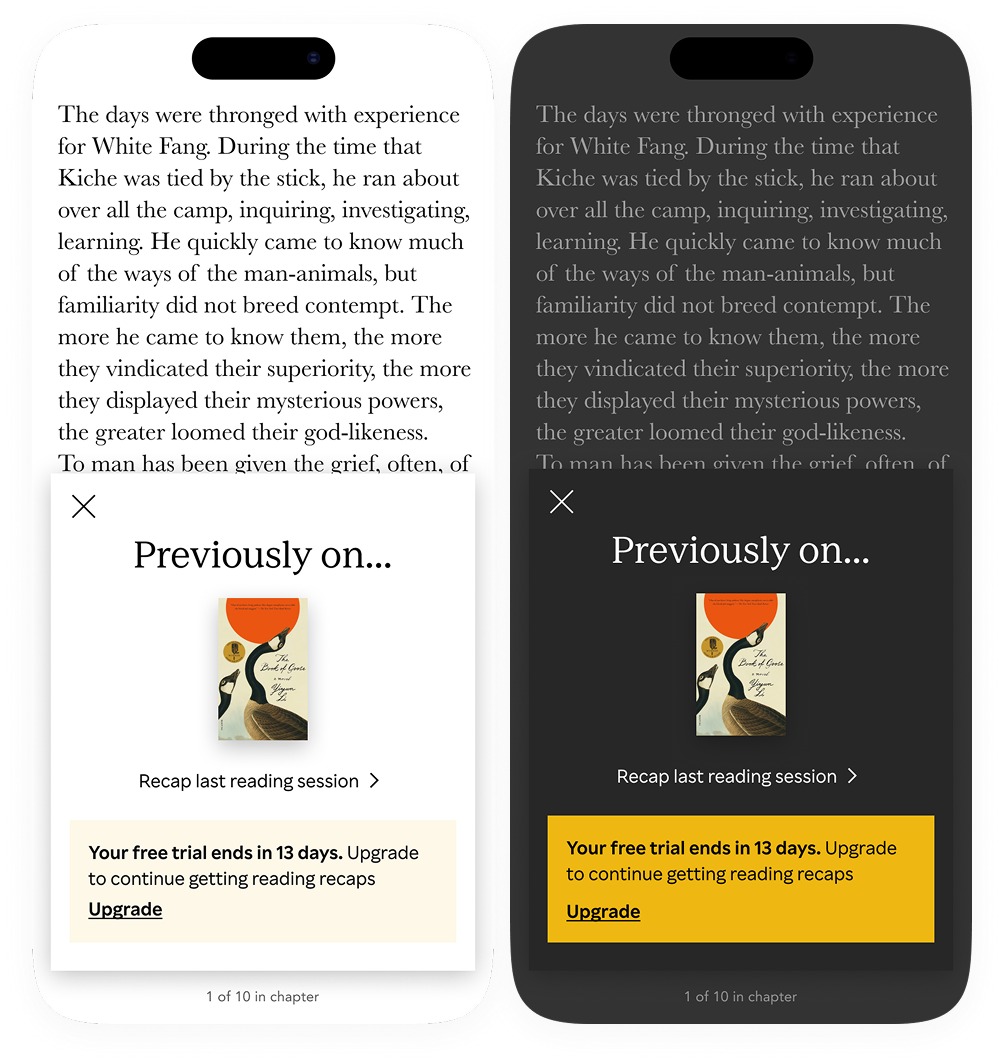
Problem: Large libraries of abandoned books — users forget what happened.
Solution: AI-generated summaries of last reading session (fiction) or note recaps (non-fiction).
Business Context: Kobo is hardware-first. Customers value warranty.
Solution: Subscription extends original warranty by 3 years + self-serve claim process.
Research: Interviewed customer care team to inform new self-serve flow.
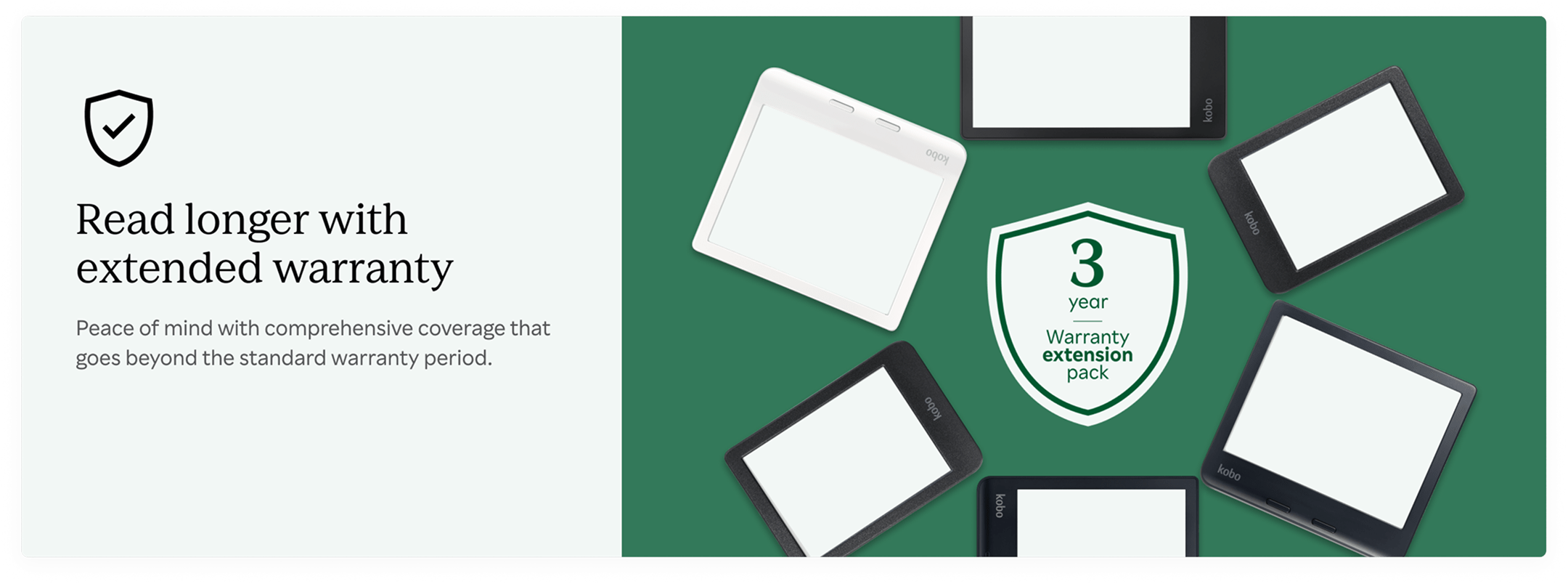
Image above is the banner from the landing page.
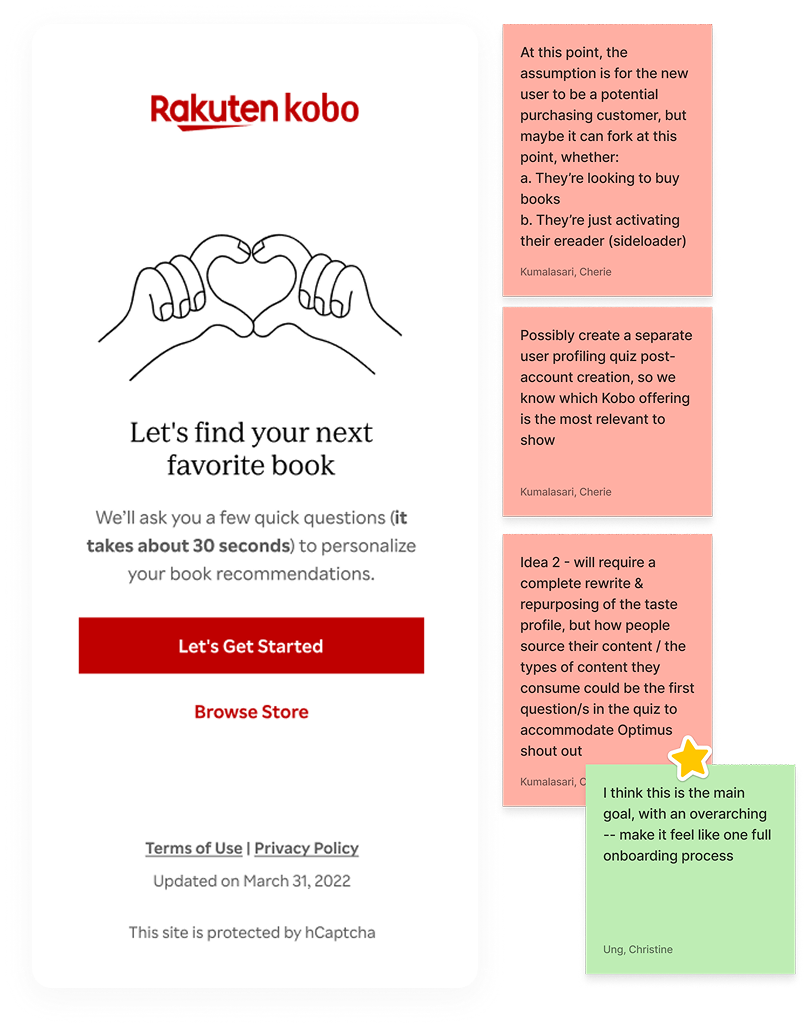
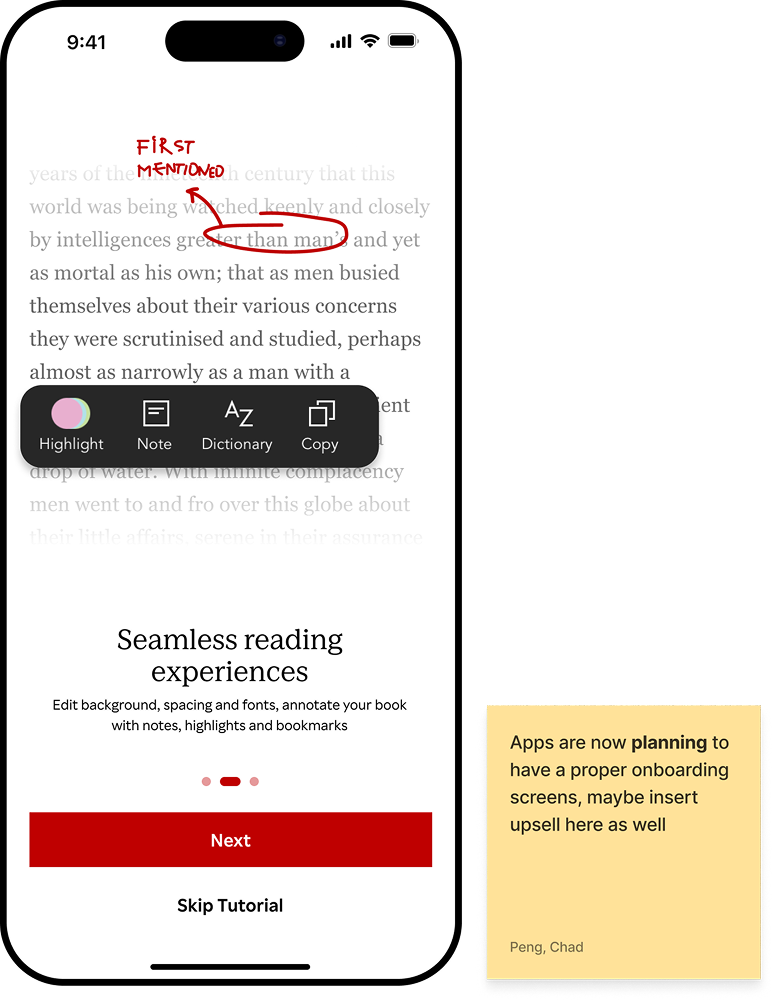
Challenge: Design team split across 5 teams (App, eReader, Web Reader, Personalization, Accounts).
My Approach: Facilitated 1-hour workshop leveraging everyone's context. Started with my brainstorm of subscription features, then each team mapped user flows, wireframed entry-points for their platform.
Outcome: Aligned cross-functional team on consistent conversion strategy across all touch-points.
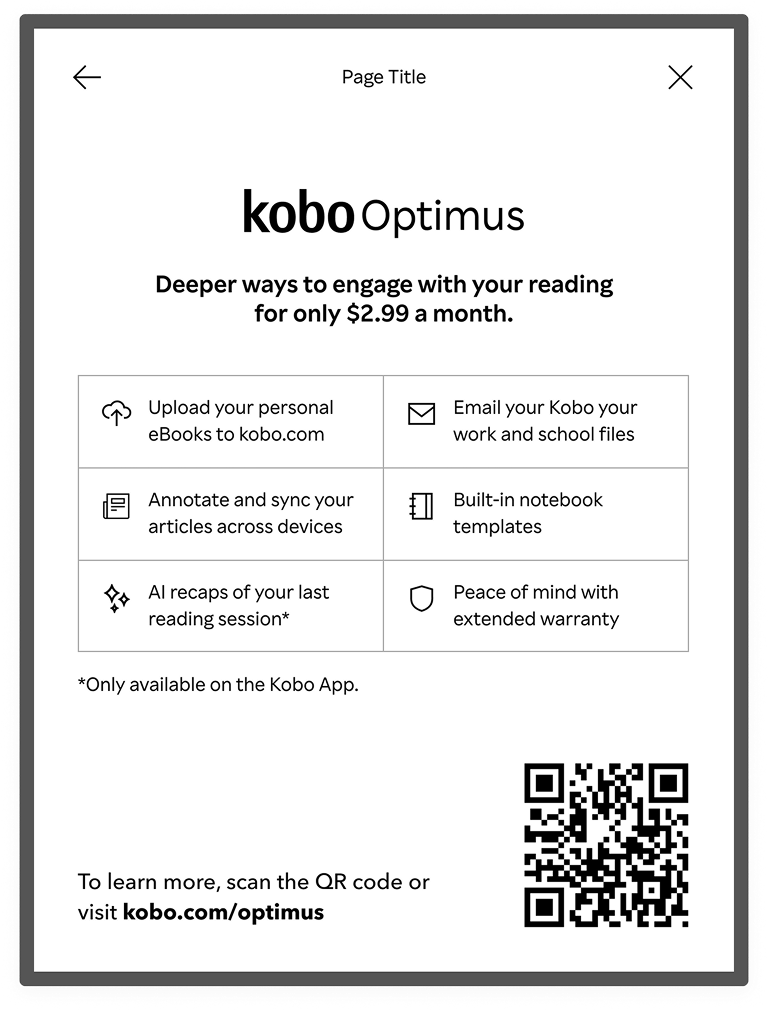
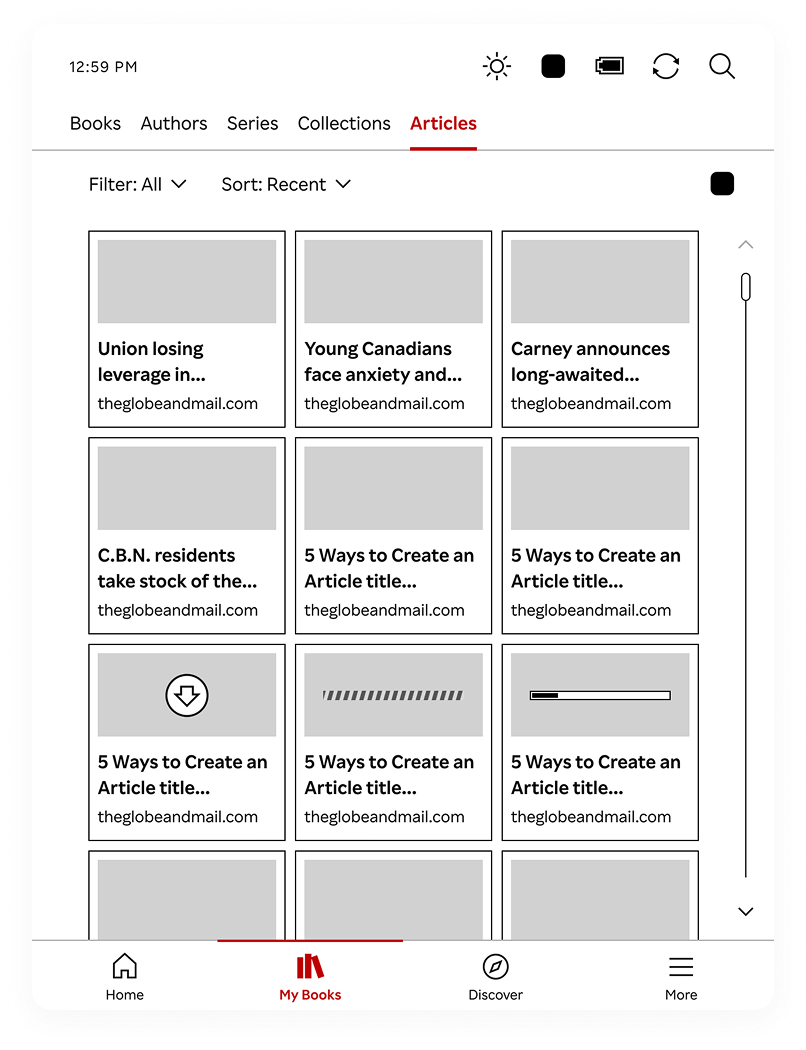
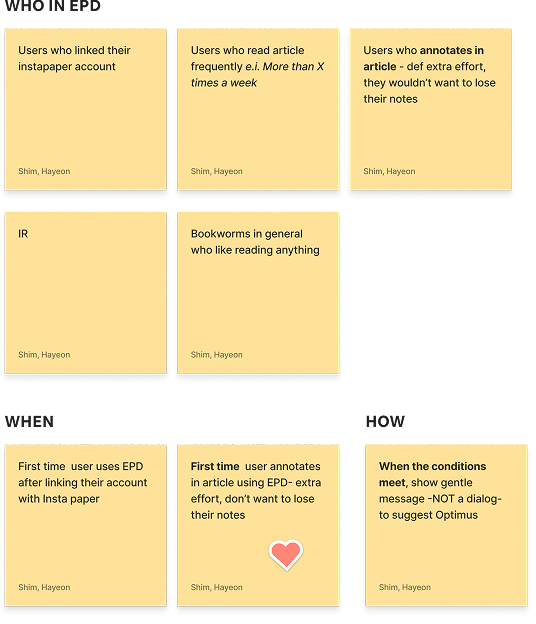
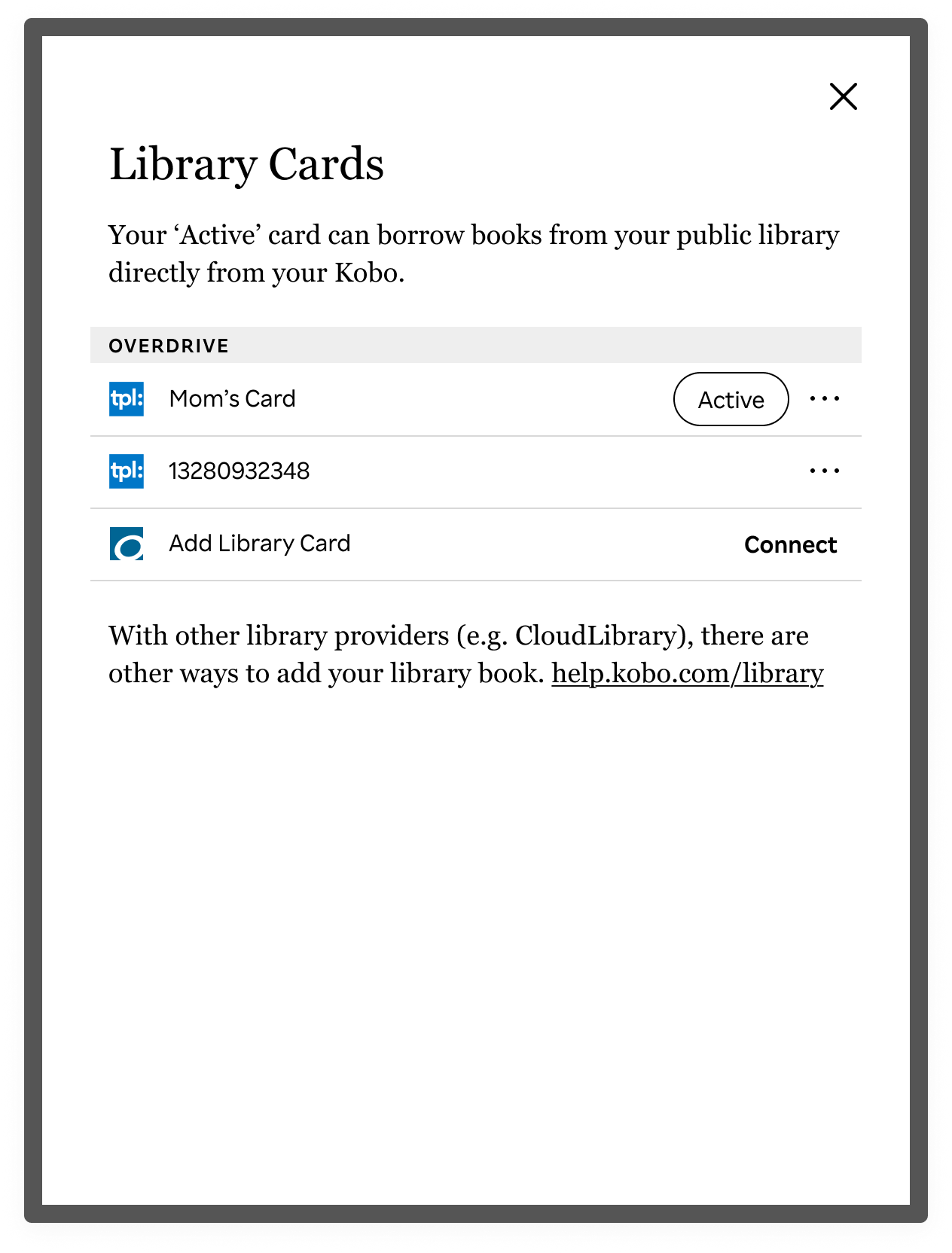
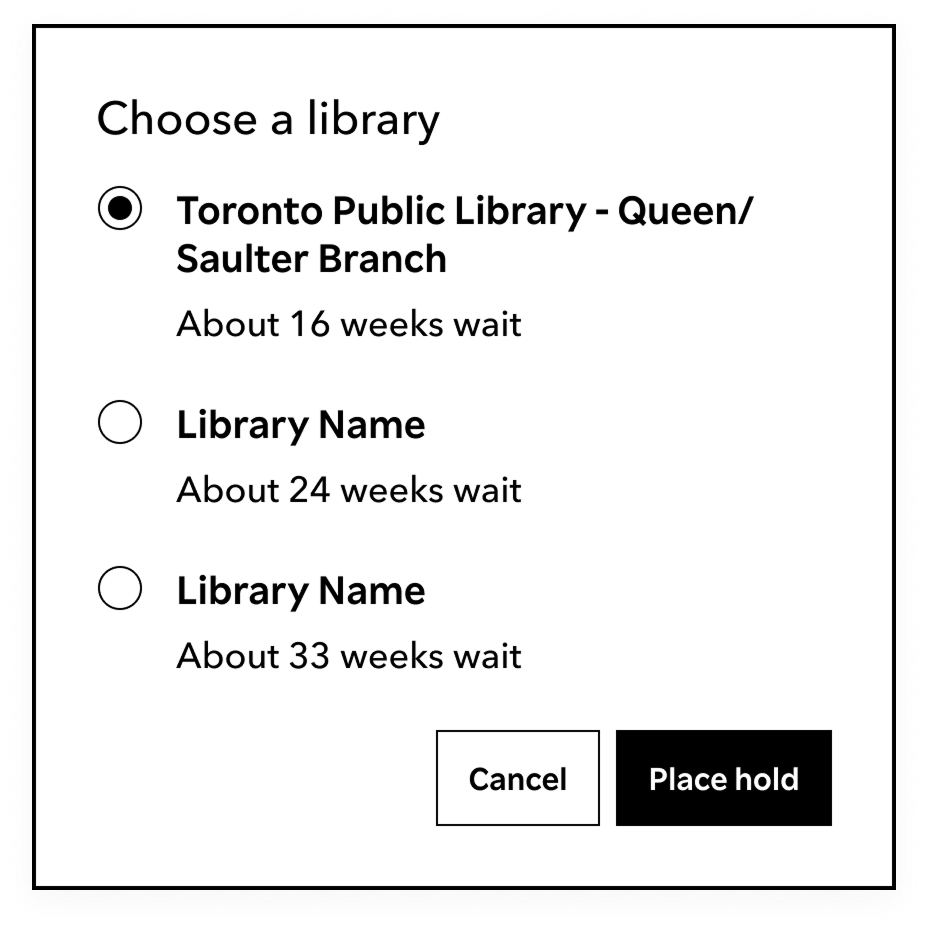
Major Value Prop: Users can only connect one library card. Wait times reach 8 months.
Solution: Connect multiple cards, significantly shortening wait times.
Brand Win: Differentiates Kobo from competitors, solves major pain-point.
Ask me about: User Research for Kobo’s Library Borrowing Experience
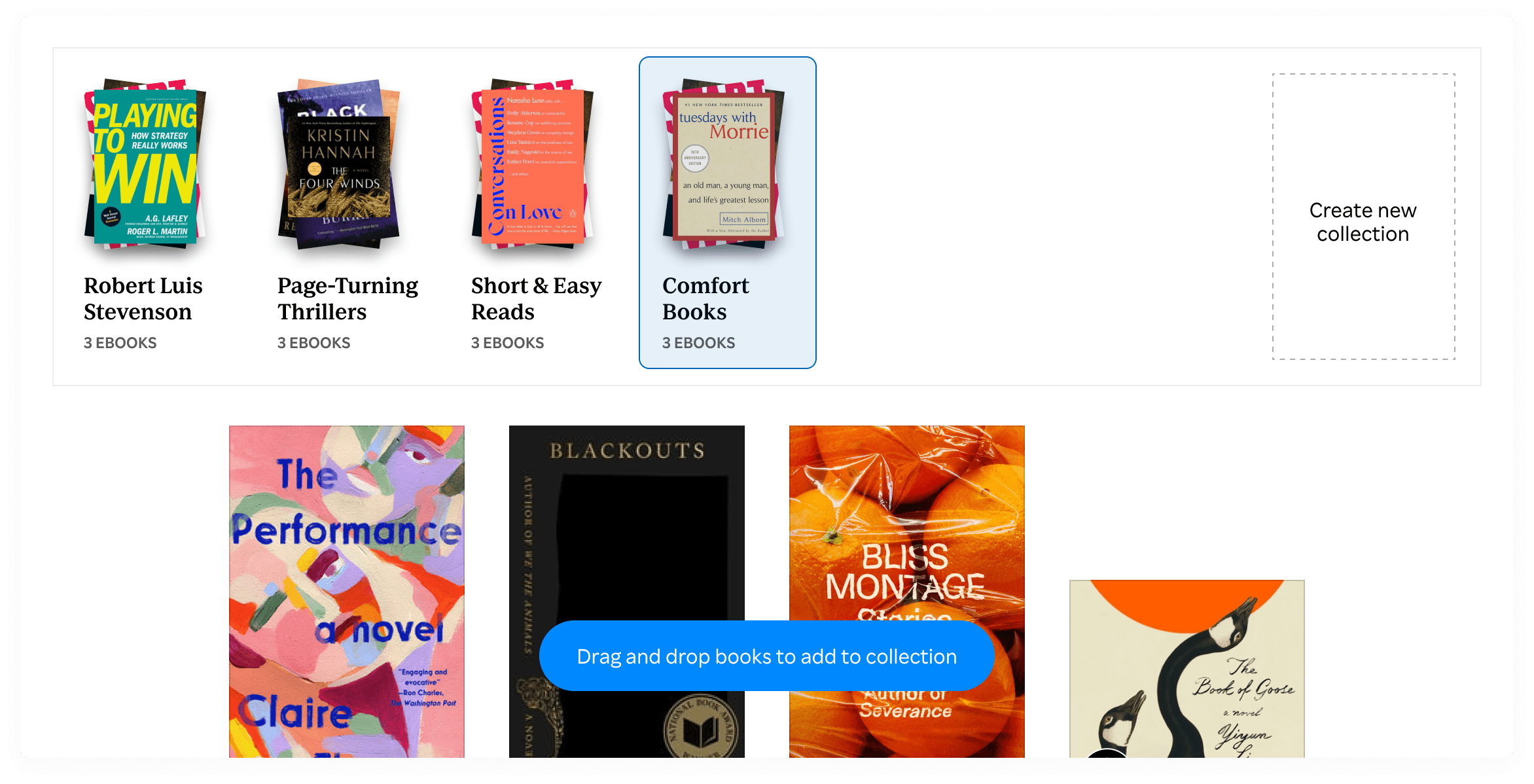
Problem: Only available on eReader with slow eInk technology.
Solution: Web-based collection management for easier organization of 500+ book libraries.
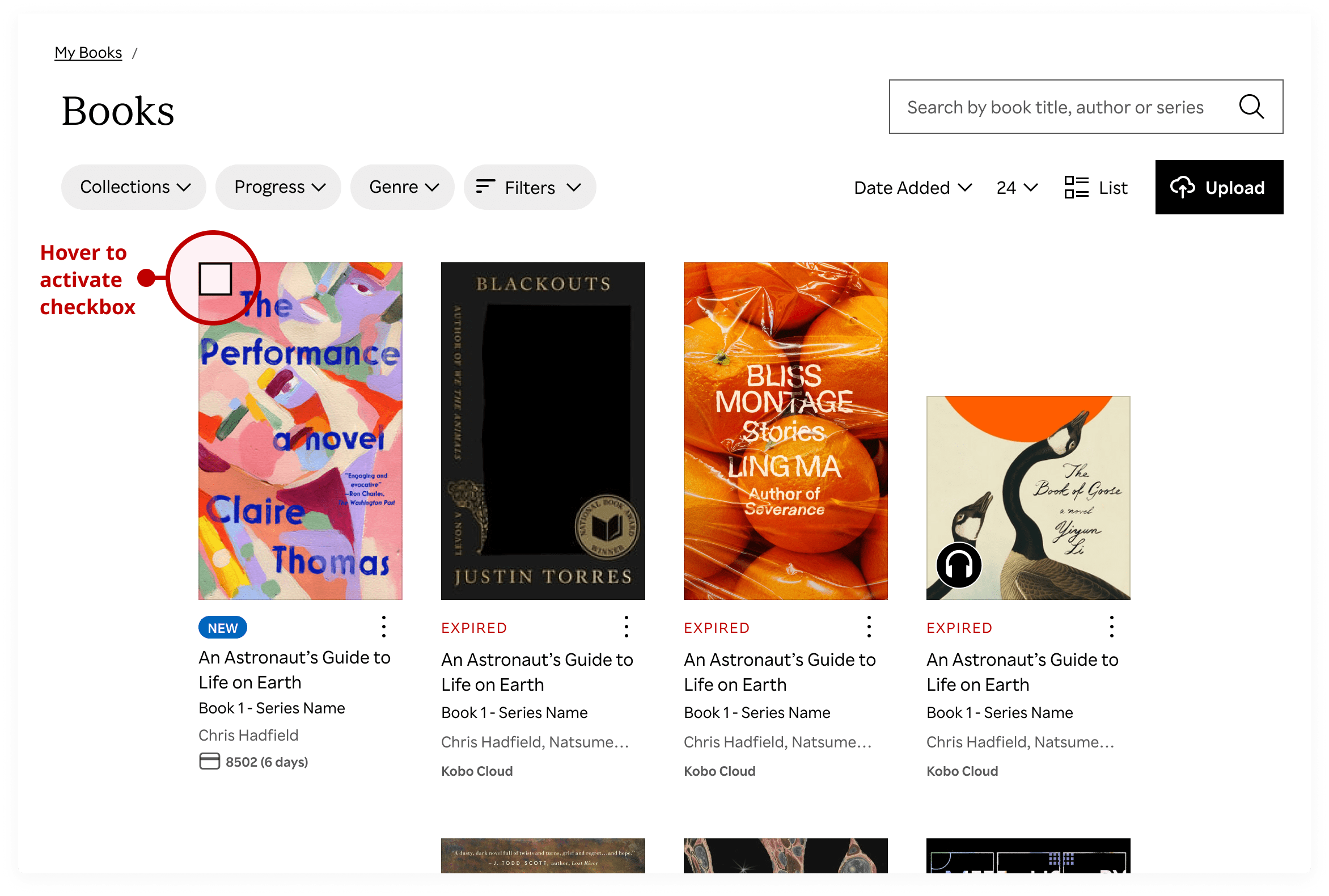
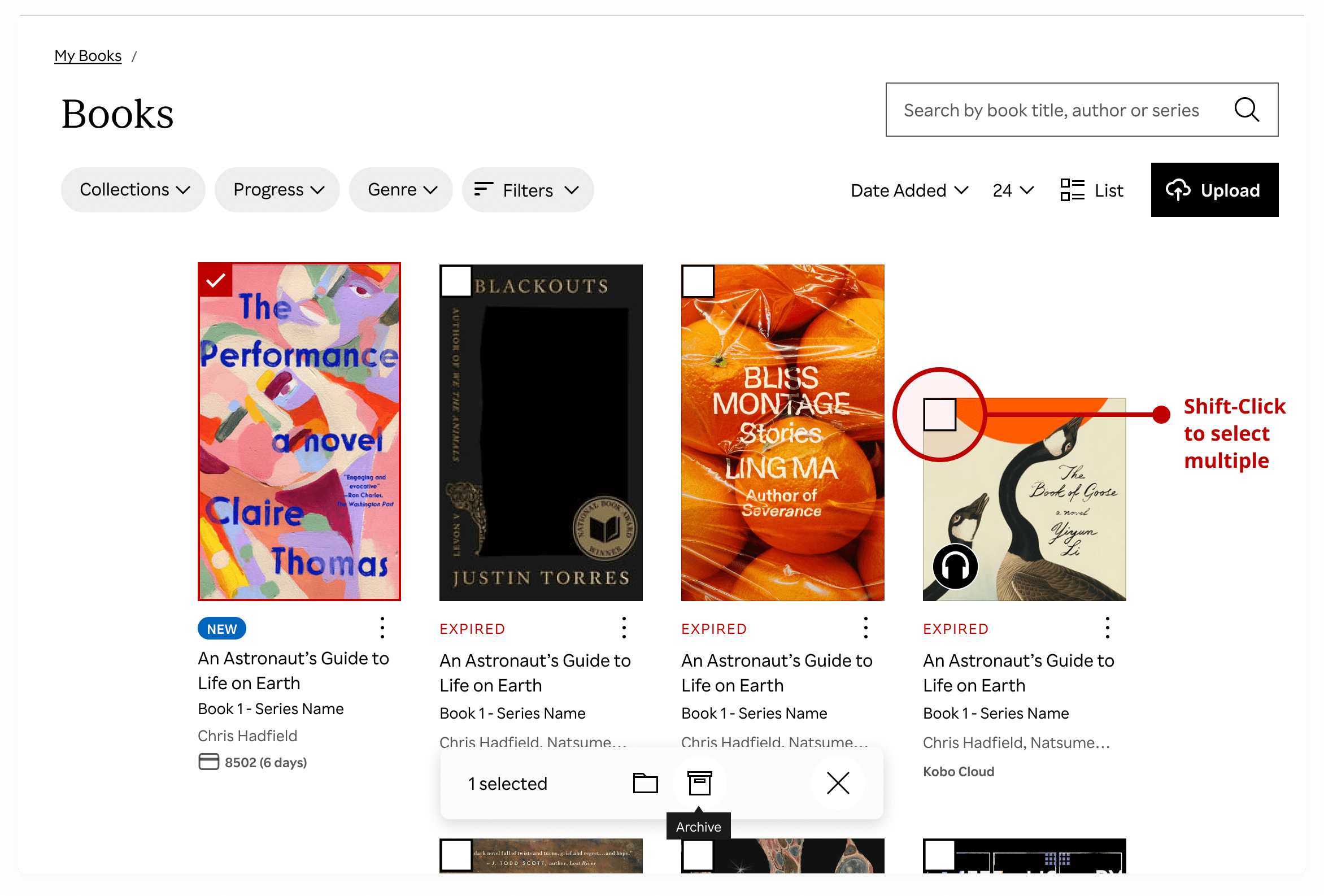
Problem: Users couldn't bulk manage expired library books, lapsed subscription books, or personal documents.
Solution: Multi-select to add multiple books to collections or archive.
Mobile: Touch + hold to activate checkboxes.
Ask me about: Usability Test and Iteration of Email instructional
The question throughout building this subscription was: “How much would readers pay for this?” Upon launch, we will track trial sign ups, feature usage behaviour, and converted subscribers.
50K
Optimus Subscribers
Target within first year (excludes trials)
2M
Market Size of Freegans
Total addressable market
200K
Kobo Plus Subscribers
Benchmark of existing subscription for different romance + fantasy readers

Cross-Functional Collaboration
Engineers were involved throughout solutioning, making handoff seamless. All documentation was ready, designs annotated, no surprises during dev.

Launching New Revenue Streams
Building subscription products within existing organizations requires balancing monetization with user trust. Free features that build trust are as important as gated premium features.

Balancing Priorities
Successfully justified UX improvements through OKRs while delivering new subscription features on timeline.

